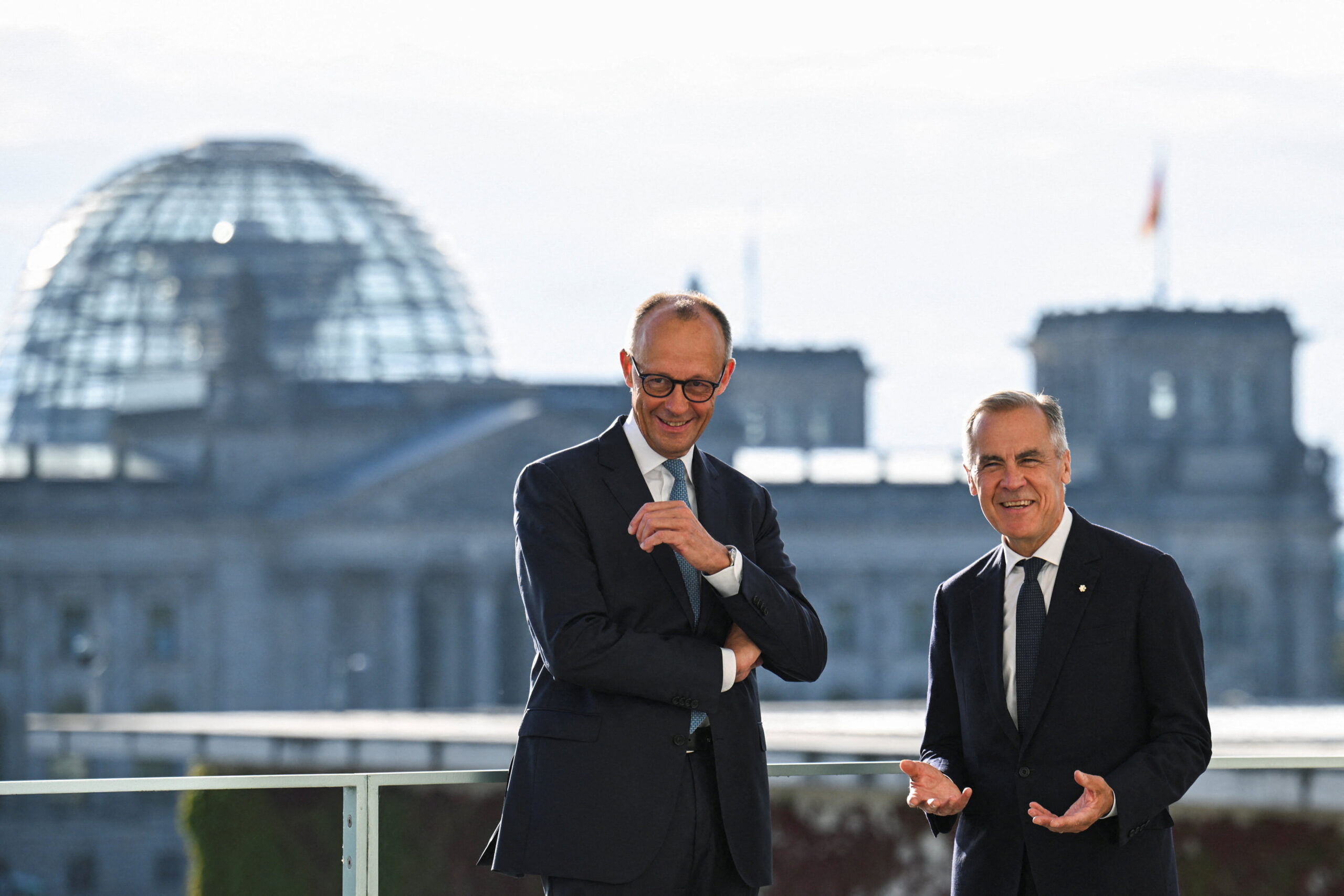
Germany and Canada Mark 75 Years of Diplomatic Relations
Under the theme “75 Years: A Growing Partnership,” the strengthening of the friendship between the two countries is being celebrated this year. A series of visits as well as political and academic meetings mark an opportunity to reflect on the past and chart a course for the future.
German Defense Minister Boris Pistorius recently acknowledged this during a ceremony at the German Ambassadors’ Residence in Ottawa. He noted that Canada and Germany are friends who trust one another, and that this friendship began 75 years ago, “when reconciliation was anything but guaranteed.” On several occasions, the minister drew parallels to hockey, Canada’s “national” sport. “We stand together as a team. We move the puck together. We are skating in the same direction.” Canadian Foreign Minister Anita Anand said the ties between Germany and Canada are stronger than ever. Canada knows it has a partner in Germany when it comes to critical issues.
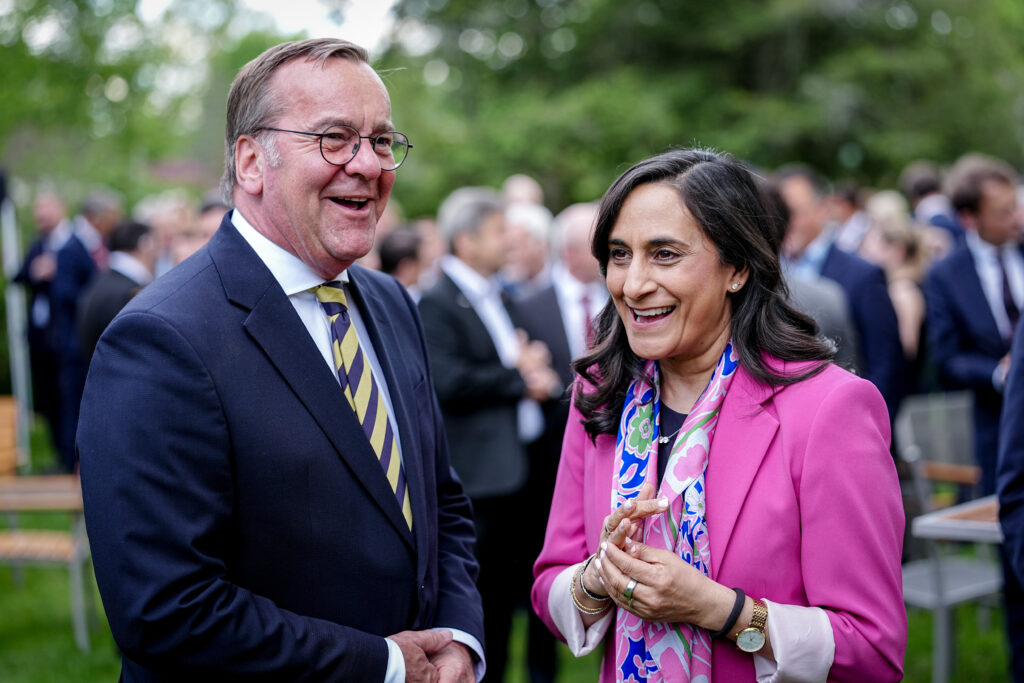
© picture alliance/dpa | Kay Nietfeld
On July 10, 1951, Canada upgraded its mission in Bonn to an Embassy; on November 8 of the same year, the Federal Republic of Germany opened its Embassy in Ottawa. On August 1, 1975, Canada established diplomatic relations with the GDR, but it was not until 1988 that the GDR sent an ambassador to Ottawa and opened an embassy, which was closed two years later. Following German reunification, Canada relocated its embassy to Berlin in 1999 and opened a new embassy building at the Leipziger Platz in 2005.
Relations between Canada and Germany were often overshadowed by German-U.S. relations. Too often—from Canada’s perspective—visits by German politicians to Ottawa were merely stopovers on their way to or from Washington. This was sometimes described in Ottawa as “benign neglect.” When Federal Foreign Minister Klaus Kinkel visited Montreal and Toronto in November 1997 to open centers for German and European studies at the Université de Montréal and York University in Toronto, he spoke of a “problem” in German Canadian relations: they were “too normal, too taken for granted” and needed revitalization.
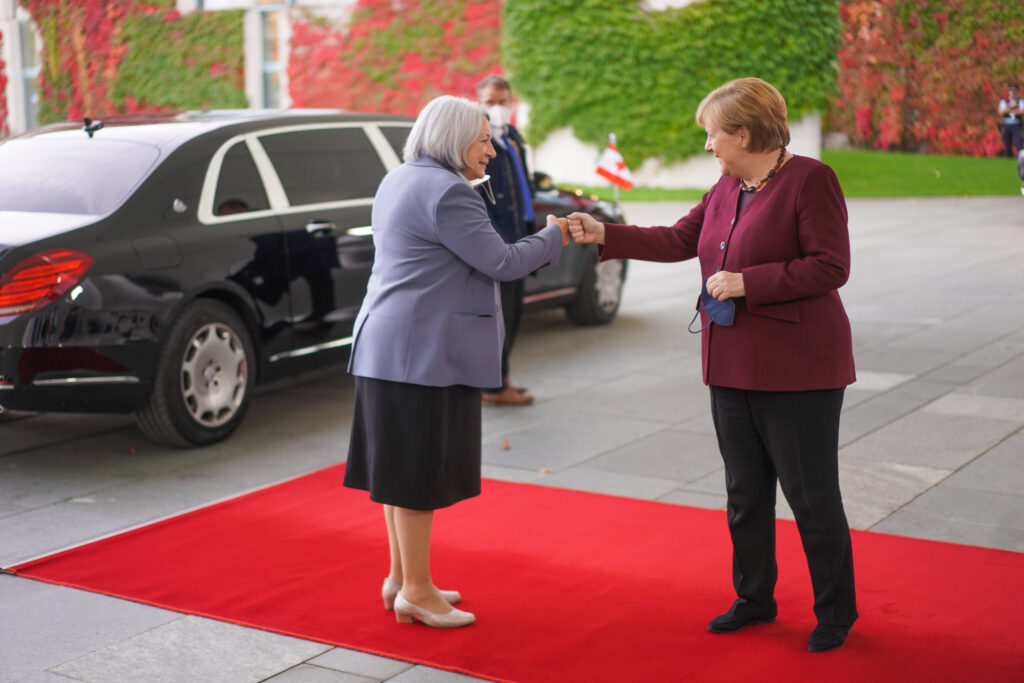
© picture alliance/dpa | Jörg Carstensen
Now the relations are very vibrant and exciting. “Canada-Germany@75: Two Grown-Ups Joining Forces”—that is the title Jan Claudius Völkel, a professor of political science at the University of Ottawa, has given to his assessment of 75 years of diplomatic relations. They began in 1951 as “relations between unequals”: on the one hand, Germany—divided after its defeat in World War II and burdened by the crimes of the Nazis—which sought reintegration into the international community in both the West and the East; on the other hand, Canada, which had been among the victorious Allies in both world wars. This has evolved into a highly reliable partnership between the two nations, reflected in numerous agreements and collaborative efforts. In the wake of geostrategic shifts and tensions with the United States, Canada is moving tangibly closer to the European Union, Völkel concluded.
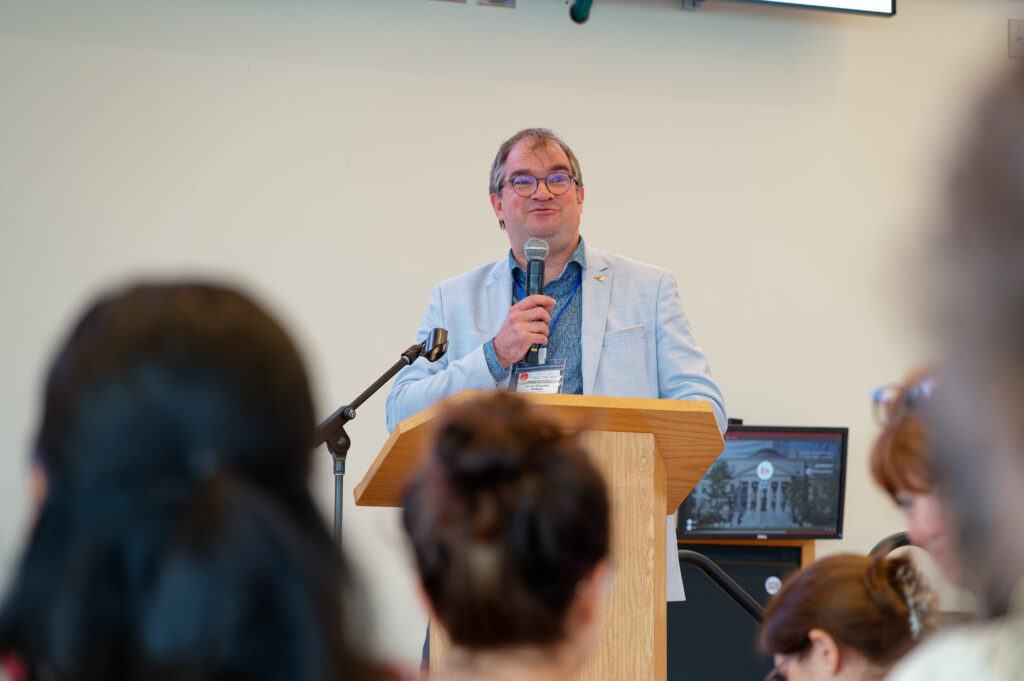
© German Embassy Ottawa
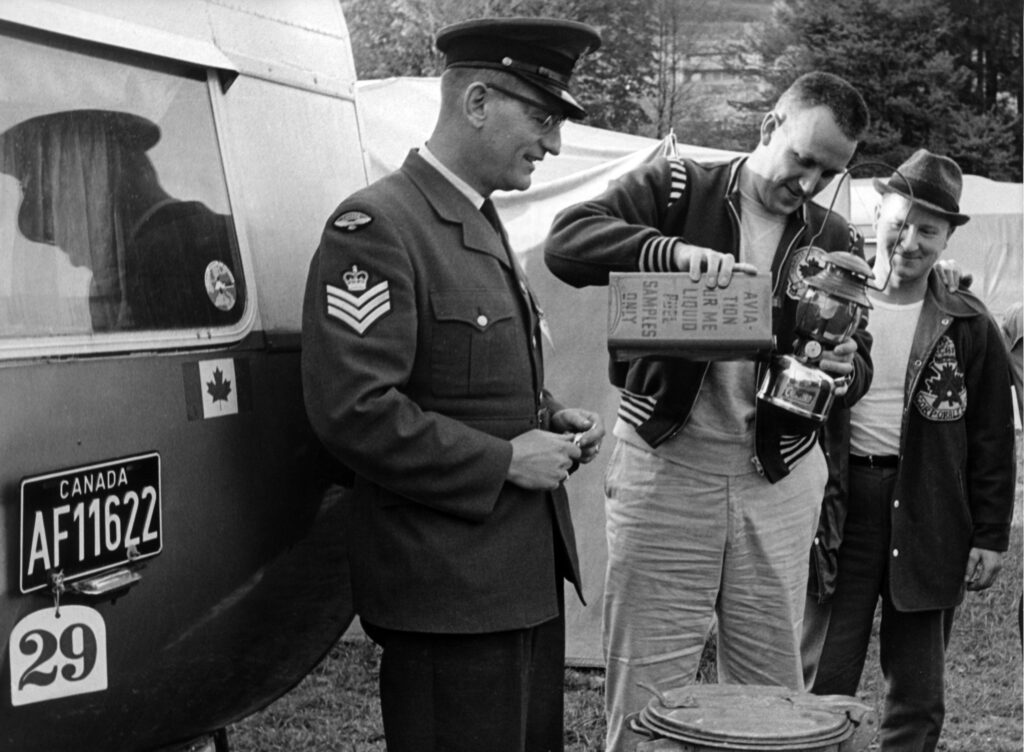
Canadian troops had advanced into northern Germany during the final year of the war and made a significant contribution to Germany’s liberation from the Nazi dictatorship. Canadian pilots participated in the Berlin Airlift, joining units of the British Royal Air Force and the United States Air Force to supply Berlin’s population during the 1948–49 blockade by the Soviet Union. Starting in 1951, Canadian troops were stationed in Europe again under the umbrella of NATO. Canadian bases were initially located in northern Germany and in Rhineland-Palatinate, which was then part of the French occupation zone. Some of these bases were abandoned in the mid-1950s.
Nowhere was Canada’s presence as strong or as long-lasting as in Lahr. An important part of the shared history and ties between Canada and Germany is connected to this city in Baden-Württemberg. After French President Charles de Gaulle announced his country’s withdrawal from NATO’s military structure in 1966, Canada relocated its air forces from eastern France to Germany. The airfield in Lahr, which the French had abandoned, became the new Canadian base. Between 1967 and 1994, approximately 5,000 Canadian soldiers were permanently stationed in Lahr. Including civilian employees and family members, between 10,000 and 15,000 Canadians lived in Lahr. Over the period from 1967 to 1993–94, the total number was estimated at 200,000. In mid-1993, Canadian troops were withdrawn from Lahr.
© dpa picture archive
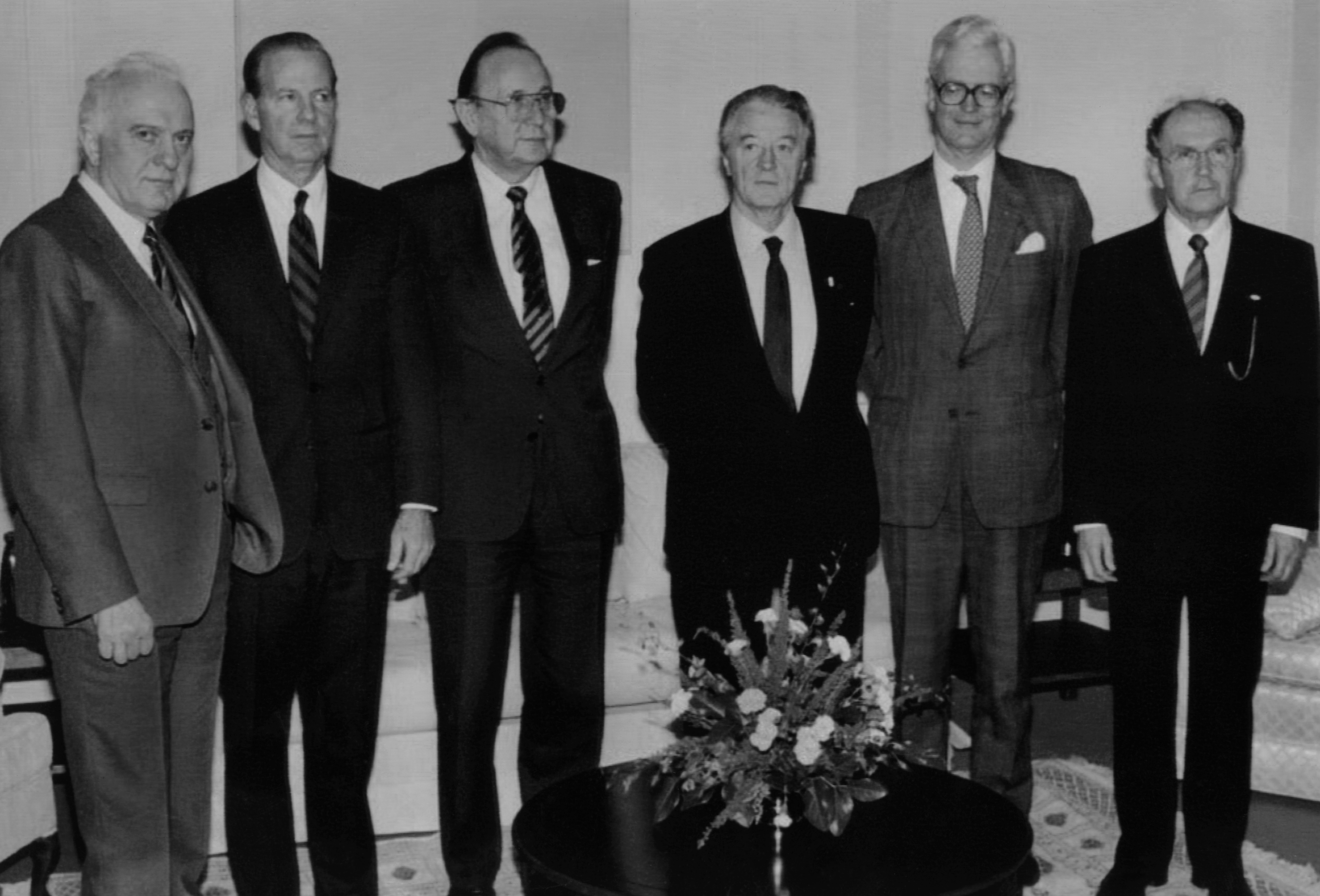
Another key event in German Canadian history was the “Open Skies” conference in Ottawa in 1990. On February 12, the foreign ministers of NATO and the Warsaw Pact gathered in Ottawa to negotiate the “Open Skies” agreement. Both blocs wanted to allow each other to conduct military reconnaissance flights over their territories as a confidence-building measure. Credit is given to the conference chair, Canadian Foreign Minister Joe Clark, for enabling the foreign ministers of the United States (James Baker), the United Kingdom (Douglas Hurd), France (Roland Dumas), the Soviet Union (Eduard Shevardnadze), and the two German states—Oskar Fischer (GDR) and Hans-Dietrich Genscher (FRG)—to discuss the future of Germany on the sidelines of the conference.
© picture-alliance / AFP Pool | AFP pool
At a memorable breakfast at the German residence on the morning of February 13, 1990, Genscher first reached an agreement with his colleagues Baker, Dumas, and Hurd on the “Two Plus Four” framework. Through countless bilateral meetings and telephone conversations with the capitals, they succeeded in involving Soviet Foreign Minister Shevardnadze as well and securing his approval for the “Two Plus Four” framework, which led to German reunification. Today, an original section of the Berlin Wall covered in graffiti is on display at the War Museum in Ottawa. It is a gift from the Federal Republic of Germany to Canada and commemorates the “Open Skies” conference in Ottawa and Canada’s support for the reunification process. Canada was among the countries that supported this process very early on.

© War Museum
“We were the first NATO ally to declare our official support for the concept,” Clark later wrote in his essay “From the Fallen Wall to Open Skies—Canada’s Diplomatic Role in the Reunification of Germany.”
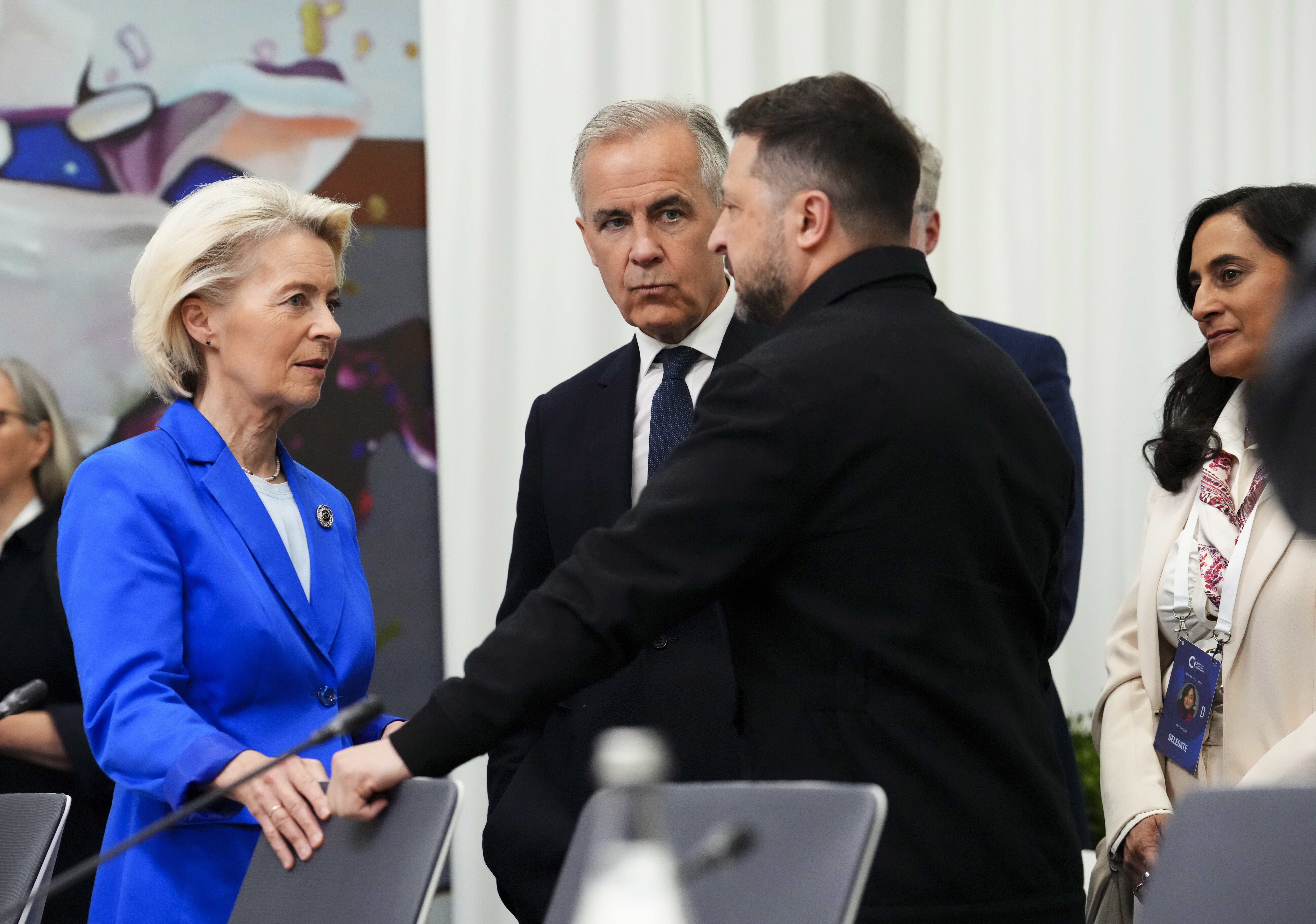
Nearly three million Canadians have at least some German heritage, and hundreds of thousands visit the other country each year as tourists. Academic ties between universities and research institutions are strong, and government programs promote travel and study in the partner country. Cultural exchange has flourished since the 1975 cultural agreement. Bilateral trade has risen sharply since the conclusion of the CETA trade agreement and, according to Canadian government figures, amounted to 30 billion Canadian dollars in 2024—approximately 18.7 billion euros at today’s exchange rate. Germany and Canada are strengthening their cooperation with a view to securing critical minerals and energy resources. They are linked through NATO and multilateral agreements—such as those with Norway and Denmark regarding cooperation in the North Atlantic. During Pistorius’s visit to Ottawa in 2024, Canada pledged the equivalent of 52 million euros to a fund initiated by Berlin to strengthen Ukraine’s air defense. Canada is one of three “lead nations” in the Baltic states; the multinational brigade in Lithuania is under Ottawa’s command, while the brigade in Latvia is led by Germany. Canada is the only non-European country participating in the European defense procurement program, SAFE. German Canadian relations must therefore also be assessed in the context of broader Canadian-European relations. Prime Minister Mark Carney, who describes Canada as “the most European of the non-European states,” attended an EU political summit in Armenia in early May.
© Sean Kilpatrick/The Canadian Press via ZUMA Press
Seventy-five years after upgrading their diplomatic missions, the connection between Germany and Canada stands as a cornerstone of modern transatlantic relations. From the legacy of Canadian troops in Lahr and the historic “Open Skies” breakfast in Ottawa to modern defence and trade agreements, this partnership has consistently risen to meet the moment. As shifting global dynamics pull Canada closer to European stability, its bond with Germany serves as a crucial anchor. Canada and Germany are facing the future as equal partners, united by shared values across an ocean and committed to a rules-based international order and multilateralism.