A portrait. A missing piece of scientific history. And a rather extraordinary conversation about AI, recognition and remembrance.
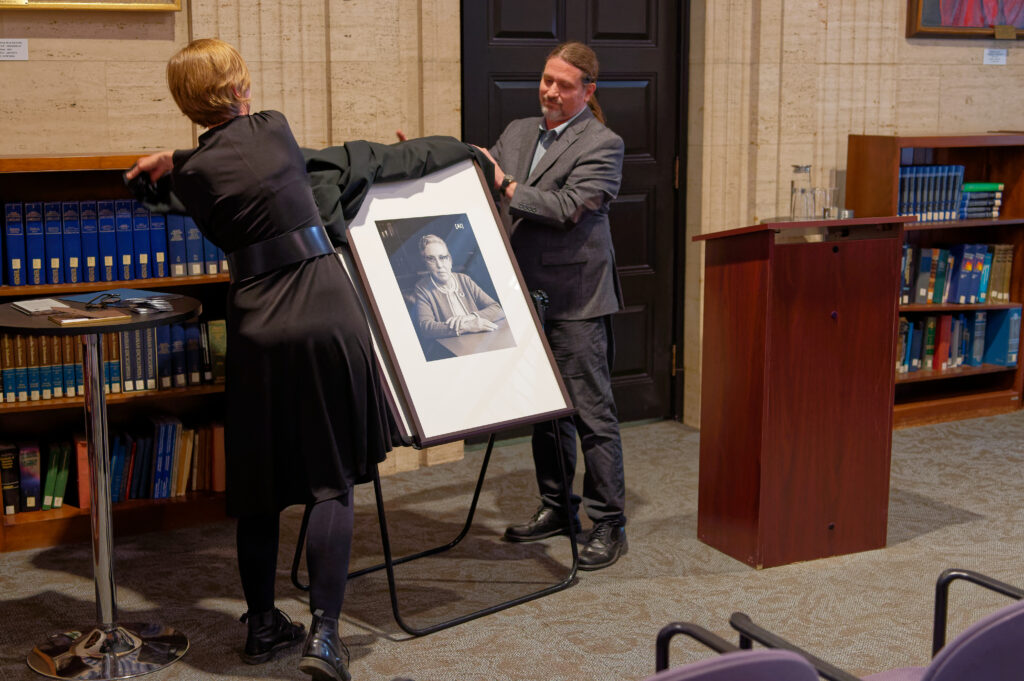
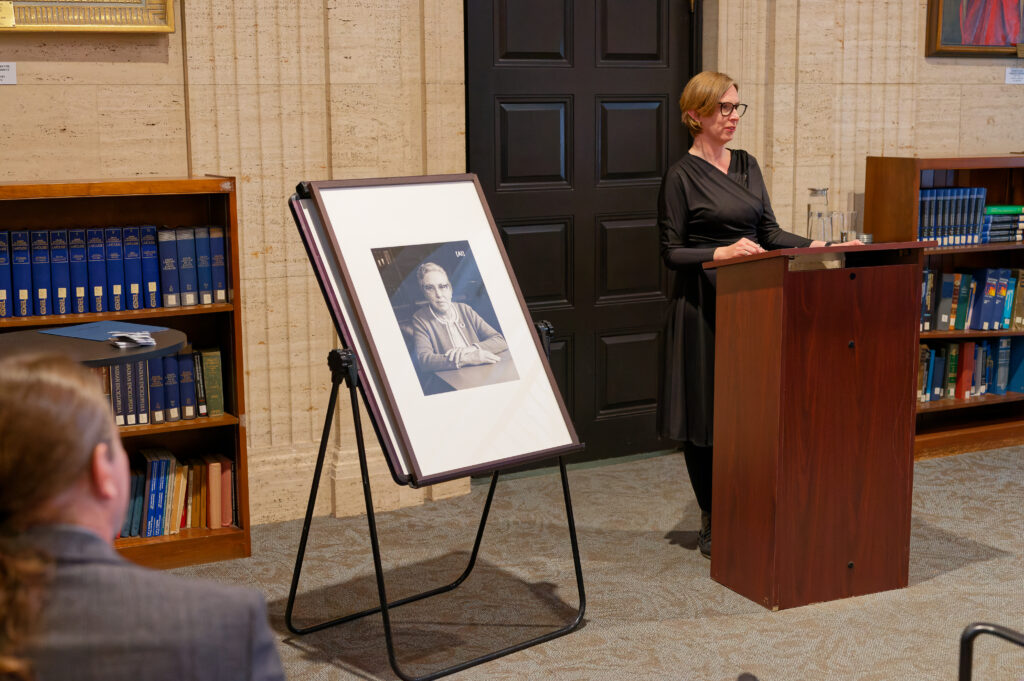
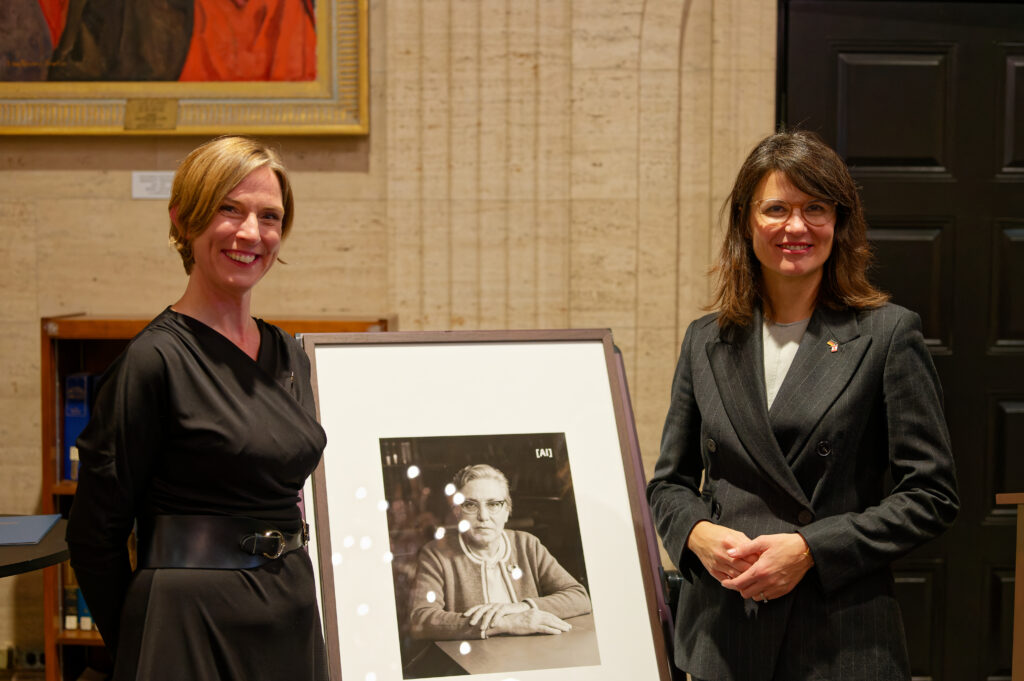
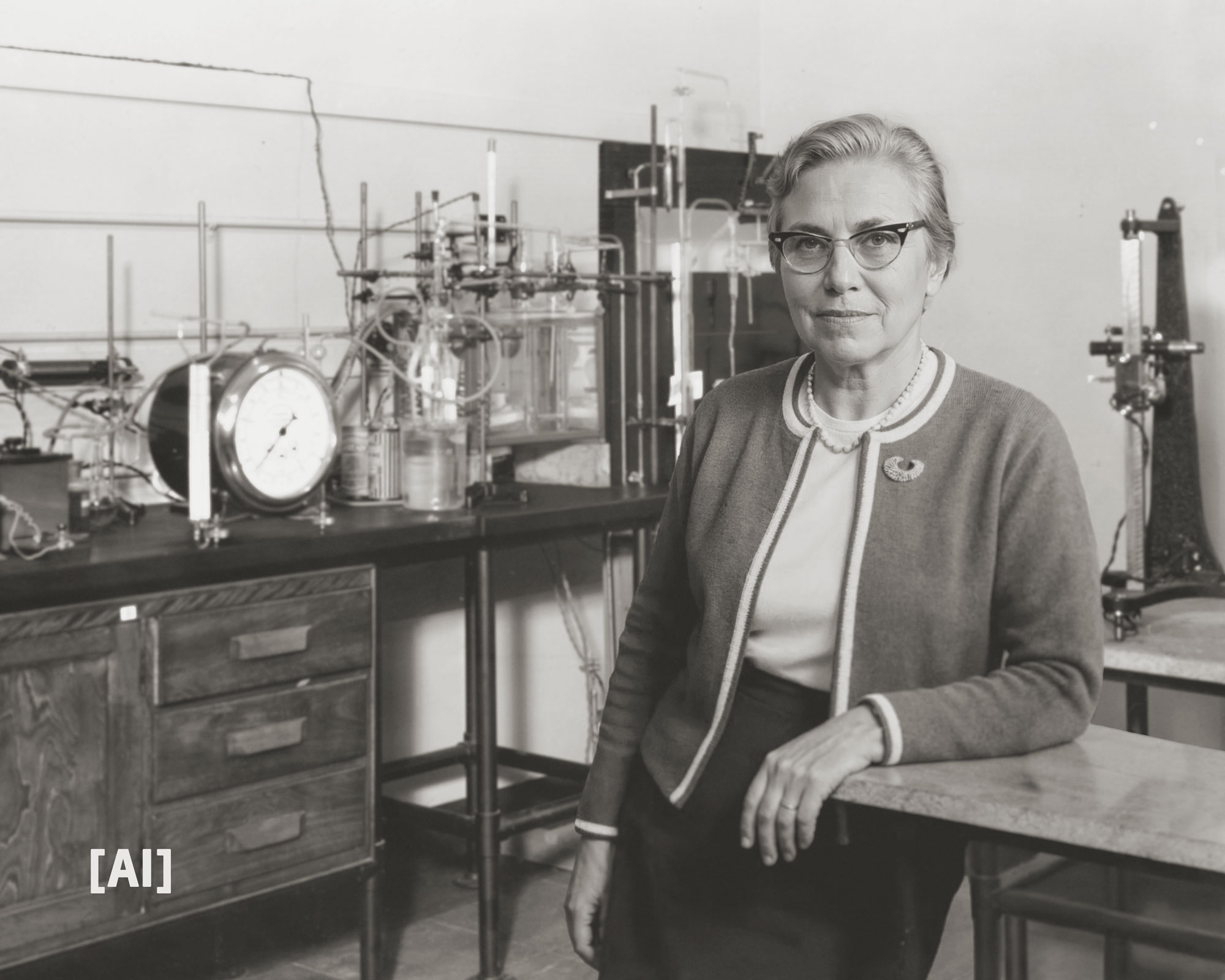
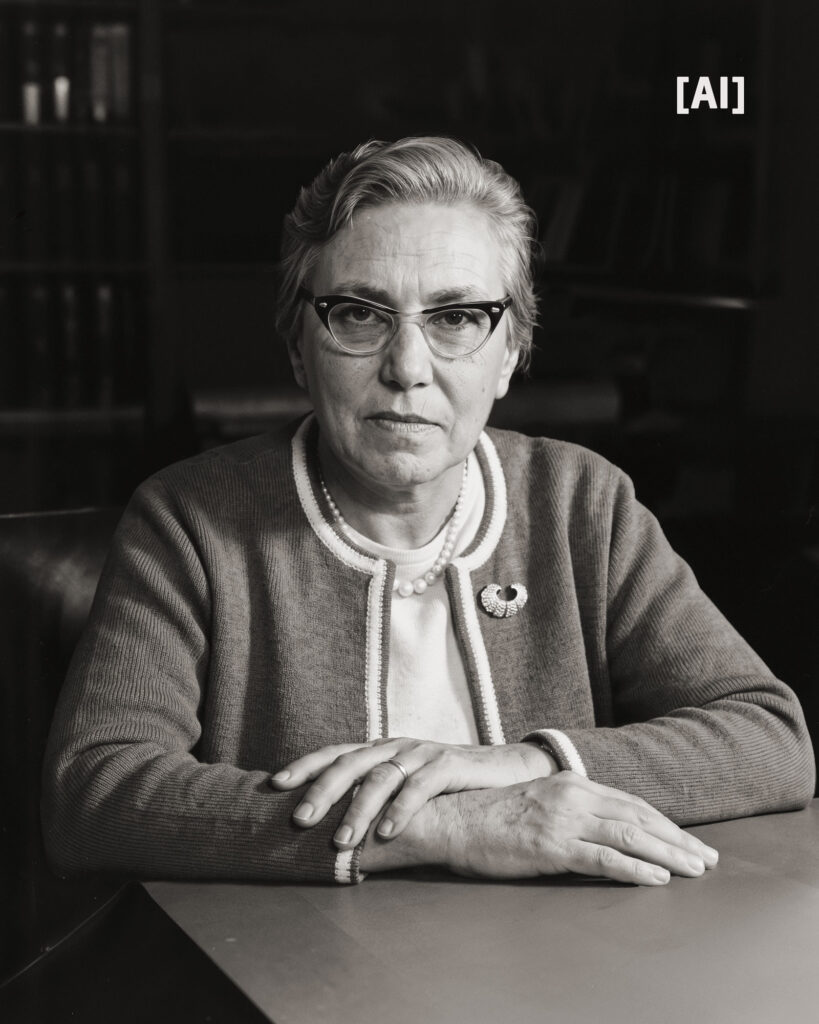
The week of October 5th, 2026, at the National Research Council of Canada (NRC), a portrait of physicist Dr. Luise Herzberg was unveiled, created by Berlin-based artist Gesine Born – using artificial intelligence.
The unveiling followed a workshop at the University of Ottawa that brought together perspectives on AI, representation, historical research and the visibility of women in science.
Born’s project, Versäumte Bilder (Missing Images), begins with a striking observation: walk through the corridors of universities and research institutions, and the portraits commemorating scientific achievement are overwhelmingly of men. What happens when we begin to address those absences?
Born uses AI-generated imagery, transparently identified as such, to explore the gaps in our visual and institutional memory. Her work raises questions about historical evidence, representation and the responsibilities that accompany new technologies. And this Canadian extension of her project, the portrait of Luise Herzberg, makes those questions particularly tangible.
A gifted physicist whose scientific career was disrupted by Nazi persecution, she rebuilt her life in Canada with her husband, Gerhard Herzberg, who would receive the 1971 Nobel Prize in Chemistry. Her own contributions to spectroscopy, atmospheric research and Canada’s early space science have received far less recognition.
Opening remarks by Julie Lefebvre, NRC Vice President Emerging Technologies Division and Deputy Head of Mission Dr. Monika Meents of the German Embassy in Ottawa as well as by Herzberg family friend Paul Dufour attested to the breadth and depth of her contributions in contrast with her lesser-known profile and biography.
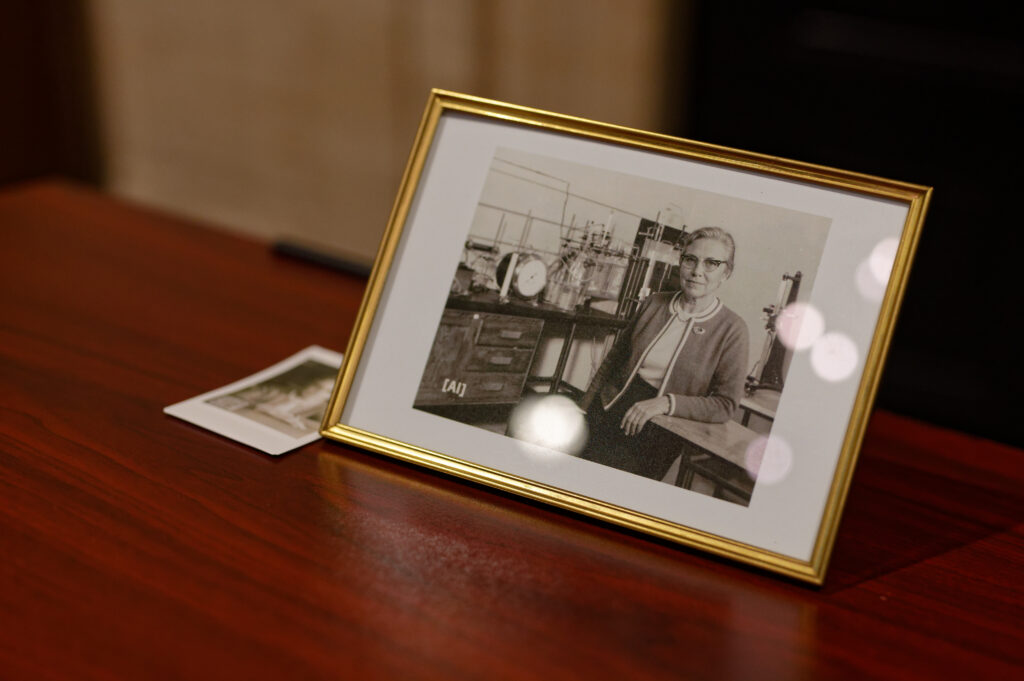
Two images now offer new ways of encountering her story: one mirrors portraits of her husband; the other imagines her at work, in the scientific setting to which she belonged.
A post-unveiling visit to Gerhard Herzberg’s preserved office at the NRC brought another dimension to the event. Among his books, scientific papers, personal belongings and original Nobel Prize diploma, we heard stories about his intellectual curiosity, generosity and commitment to science and society.
NRC Archivist Steven Leclair made a particularly moving observation: Herzberg’s legacy is preserved here as much for the way he treated people as for his extraordinary scientific achievements.
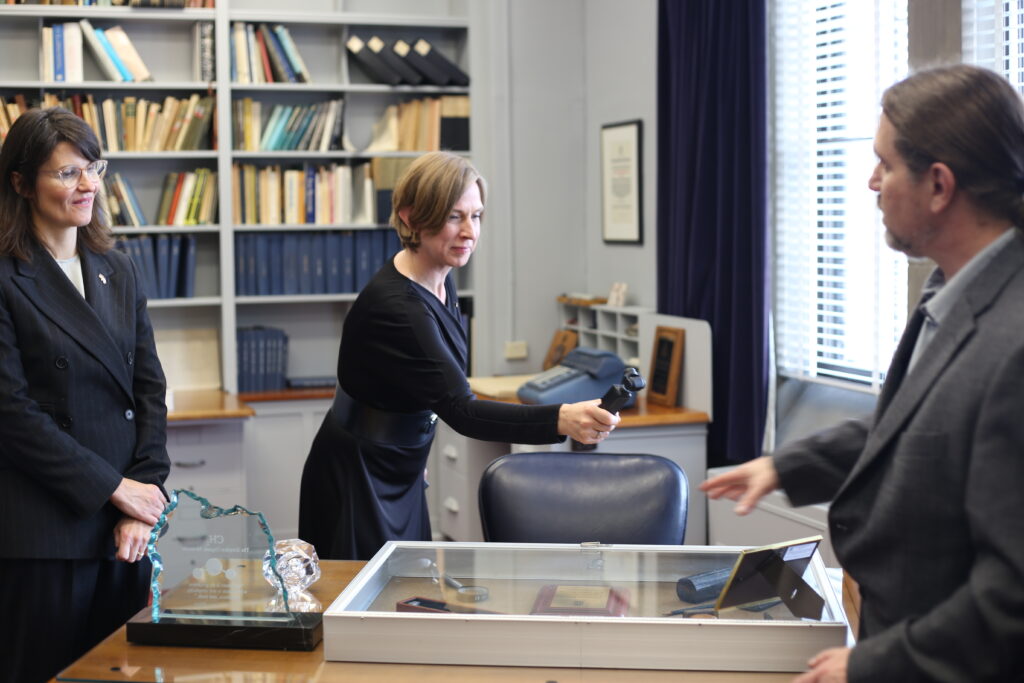
Soon, Luise’s portrait will become part of that space, providing a natural opening to discuss her work and the many other women whose contributions to Canadian science deserve greater attention.
The day also connected historical recognition with present opportunities. The NRC’s Luise and Gerhard Herzberg Postdoctoral Fellowship, established in 2022, supports outstanding early-career women researchers, carrying that legacy into new fields and discoveries.
There is an additional fitting international dimension to this story. In 2026, Germany and Canada mark 75 years of diplomatic relations and 55 years of bilateral scientific and technological cooperation. The Herzbergs’ lives reflect a difficult chapter of German history, the opportunities they found in Canada, and the scientific and human connections that have grown between our countries.
My thanks to Gesine Born, the NRC, everyone who contributed to the workshop and unveiling, and especially those who shared their knowledge and personal recollections during the unveiling event.
We left thinking about the possibilities and responsibilities of AI, the importance of historical accuracy, and the simple, enduring value of treating people well.
Whose portraits are missing from our walls? And whose stories might we discover when we begin to look?