Goethe-Institut Toronto
info-toronto@goethe.de
GOETHE FILMS: Until the End of the World
Film Screening | @ TIFF Lightbox | Written by Wim Wenders and Peter Carey, based on an idea by Wenders and Solveig Dommartin.
GOETHE FILMS: Until the End of the World
Presented by the Goethe-Institut
5 March 2026, 6:30 pM
Written by Wim Wenders and Peter Carey, based on an idea by Wenders and Solveig Dommartin starring Solveig Dommartin, William Hurt, Sam Neill, Jeanne Moreau, Max von Sydow, Rüdiger Vogler, Chick Ortega, Ryu Chishy, and more
(Germany/France/Australia 1991; 1994 Director’s Cut, 4K restoration; 287 min)
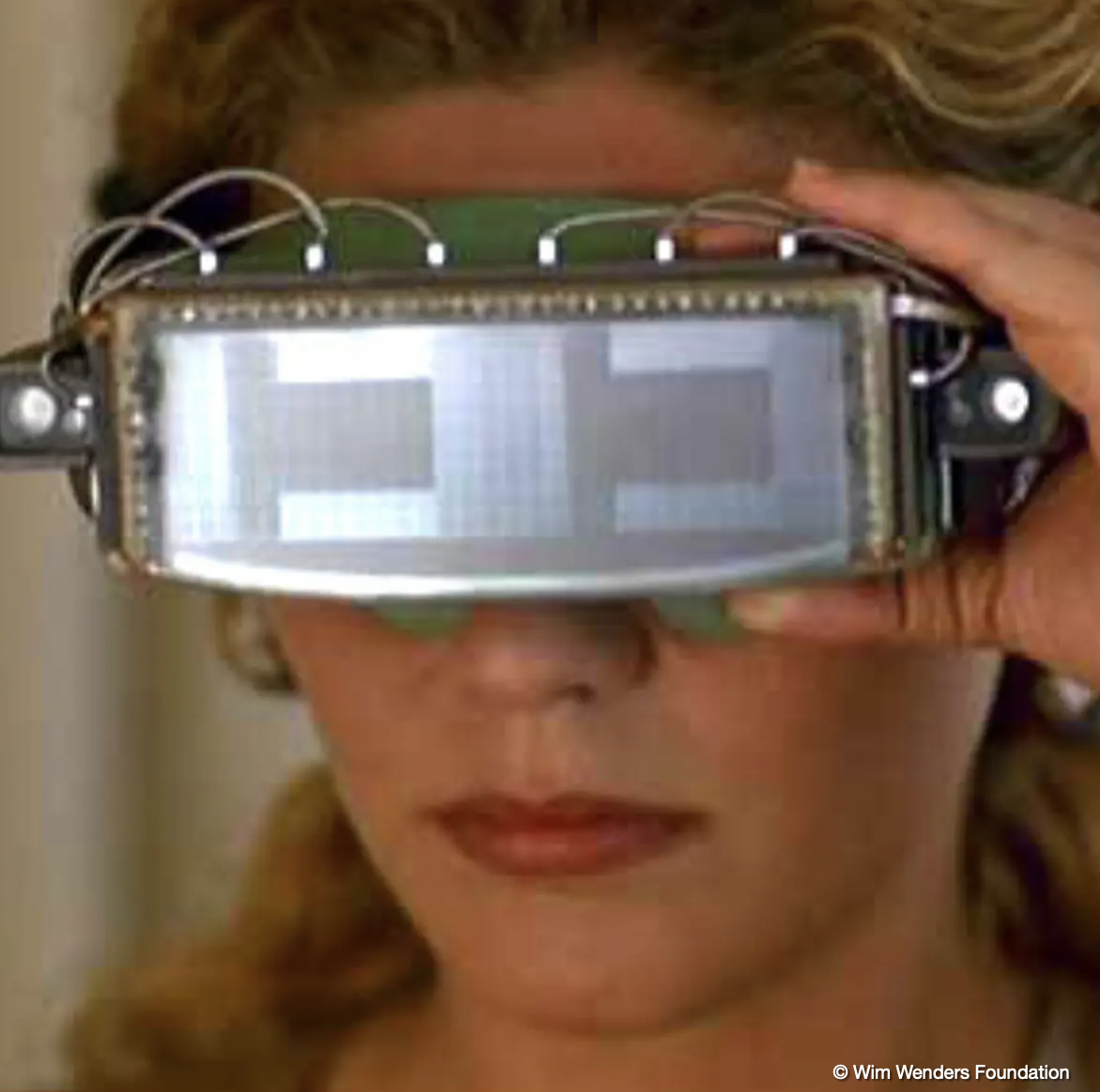
Conceived as the ultimate road movie and modern-day odyssey, this decades-in-the-making science-fiction epic from Wim Wenders follows the restless Claire Tourneur (Solveig Dommartin) as she pursues a mysterious stranger (William Hurt) in possession of a device that can make the blind see and bring dream images to waking life. With an eclectic soundtrack that gathers a host of the director’s favourite musicians, along with gorgeous cinematography by Robby Müller, this breathless adventure in the shadow of Armageddon takes its heroes to the ends of the earth and into the oneiric depths of their own souls. Presented in its triumphant 287-minute director’s cut, Until the End of the World assumes its rightful place as Wenders’ magnum opus, a cosmic ode to the pleasures and perils of the image and a prescient meditation on cinema’s digital future. (Criterion)
In order to enable his blind wife (Jeanne Moreau) to see, Dr. Farber (Max von Sydow) invents a process that makes it possible to transmit the images recorded in the brain of sighted people directly into the visual system of blind people. Farber’s son Sam (Hurt) sets out on a journey around the world in order to “see” and record the various stations of his mother’s life for her. The French woman Claire (Dommartin) falls in love with and follows him, with the author Eugene (Sam Neill), who is recording her adventure, on her heels.
The film was shot in 1990 and takes place in what was then the near future, around the turn of the millennium. What most (presciently) interested Wenders is how humanity learns to deal with images—or becomes their victim. Eugene notes: “In the beginning was the word. What would happen if only the image remained in the end!?”